In a fast‑growing UK pet insurance market, understanding which pets drive the highest costs, and why, is no longer optional. Today’s insurers face rising vet fees, evolving consumer expectations, and increasing scrutiny under Consumer Duty. To stay competitive, you need more than assumptions, you need evidence.
Our pet data brings together detailed breed and age claims patterns to help UK insurers build fairer pricing, smarter underwriting, and more predictable portfolios. These insights reveal something powerful, the pets driving your loss ratio are not always the ones you expect.
Young dogs often present the highest costs
Across multiple orthopaedic categories, young dogs (rather than seniors) drive the highest average yearly losses.
Elbow dysplasia: Young ≈ £1,783 vs Adults ≈ £962
Generic limb joint disease: Young ≈ £984 vs Seniors ≈ £279
Lameness: Young ≈ £525 vs Adults ≈ £369
This challenges long‑held assumptions and has major implications for:
- Puppy onboarding pricing
- New business rating curves
- Loss forecasting
- Consumer Duty “fair value” modelling
Certain breeds consistently dominate high‑severity categories
Some breeds show up repeatedly at the top of the cost tables, driving significant expenditure in orthopaedic and eye‑related claims.
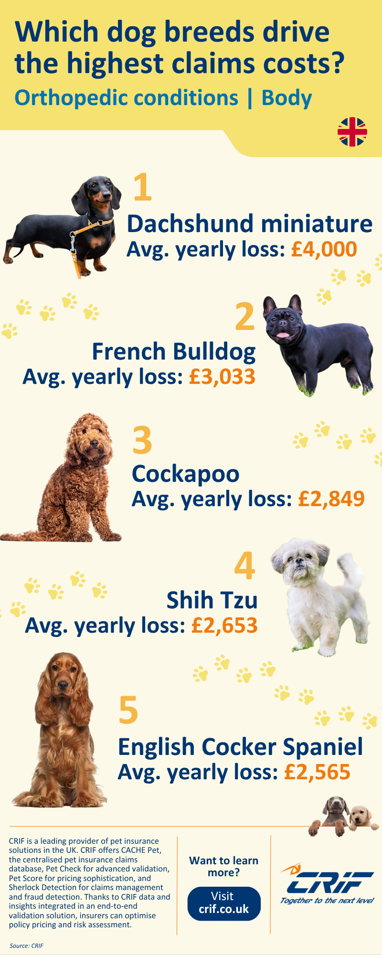
Miniature Dachshund: Highest body orthopaedic losses (≈ £4,000)
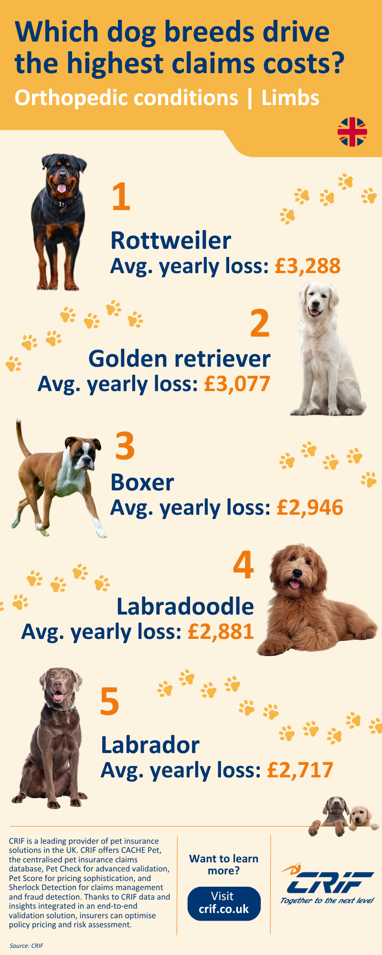
Rottweiler: Highest limb orthopaedic losses (≈ £3,288)
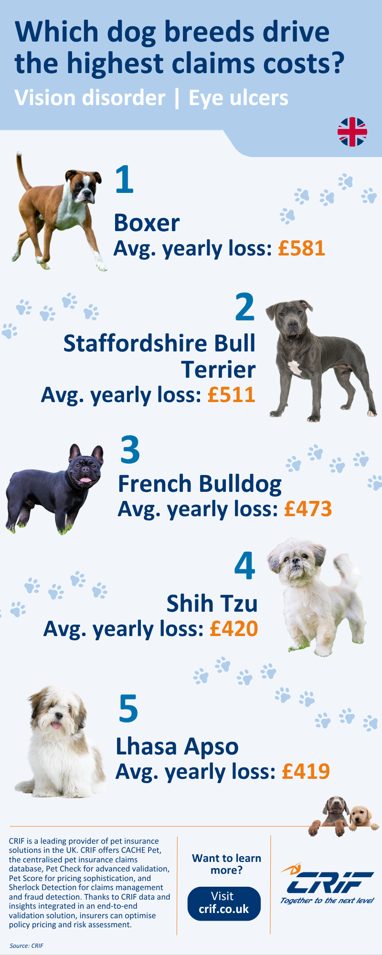
Boxer: Highest eye ulcer losses (≈ £582) and major contributor in orthopaedics
French Bulldog: High in both orthopaedic and vision disorders
Labradoodle & Labrador: Strong presence in limb conditions
Top 5 Breeds by Medical Condition